


Introduction
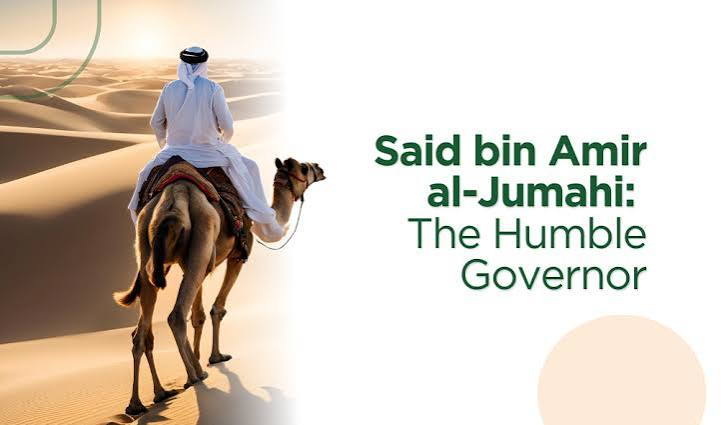
Some stories leap off the page of Islamic history with dramatic battles and miraculous events. Others whisper quietly, carrying lessons that pierce the soul. The story of Saeed ibn Amir belongs to the latter category. He was a companion of Prophet Muhammad who conquered nations yet refused to wear shoes, who governed cities yet owned nothing, and whose name is rarely mentioned in our gatherings despite his rank among the most righteous. His story is one of radical detachment from worldly desires, a forgotten gem buried beneath the rubble of our obsession with status and material success.
From Pagan Warrior to Devout Believer
Before embracing Islam, Saeed ibn Amir was known for his ferocity and commitment to the ways of ignorance. Like many young men of his time, he was passionate and loyal to his tribe, ready to defend its honor with his sword. The transformation that occurred when faith entered his heart was nothing short of extraordinary.
When he accepted Islam, he did not merely add a new label to his identity. He stripped away every attachment that competed with his devotion to Allah. The Prophet Muhammad himself noted the sincerity of his conversion, and it became evident in every aspect of his life thereafter.
The Governor Who Refused the Palace
The story that defines Saeed ibn Amir for all time begins with Umar ibn al-Khattab, the second caliph. After the conquest of Homs in Syria, Umar needed a governor—someone trustworthy, capable, and untouched by the corruptions of power. He summoned Saeed ibn Amir and appointed him to lead the newly conquered city.
What happened next reveals the nature of this remarkable man. Saeed accepted the appointment not out of ambition, but out of obedience. He did not see governance as an opportunity for enrichment. He saw it as a sacred trust, a burden to be carried rather than a throne to be enjoyed.
When Umar later visited Homs to inspect the state of the province, the people complained about their governor. The complaints were not what you might expect. They said:
“He does not come out to us until well into the day.”
“He does not respond to anyone at night.”
“He does not come out to us even one day in every month.”
Umar was troubled. These sounded like serious neglect of duty. He confronted Saeed directly, demanding an explanation. What Saeed revealed was not arrogance or laziness, but the routine of a man who had divided his entire existence between service to Allah and service to his people.
The Shirt That Told a Story
When Umar entered Saeed’s home, he found nothing of worldly comfort. The governor of Homs had no furniture, no luxuries, no stored wealth. The people told Umar that Saeed left his home only once each day—not for leisure, but to work with his own hands. He was a man who understood that leadership meant sacrifice, not privilege.
Umar wept. He offered Saeed a monthly allowance from the treasury, recognizing the injustice of a governor living in such poverty while serving the people. Saeed refused. He had no desire for the dunya. His wealth was stored elsewhere—in the Hereafter, where no thief could reach it.
The Advice That Shook a Caliph
One of the most powerful moments in Saeed ibn Amir’s life came when he offered advice to Umar ibn al-Khattab. The caliph had asked for counsel, and Saeed delivered words that penetrated to the core:
“Do not let your words depart from your deeds. The best words are those followed by actions.”
He continued, urging Umar to focus his attention on the Muslims entrusted to his care—both those near and those far. He reminded him that justice and compassion were the pillars of leadership.
Umar, a man known for his own piety and fear of Allah, was overwhelmed. He asked, “Who can do that, O Saeed?” The implication was clear: the standard was impossibly high. Yet Saeed responded with a truth that applies to every believer who holds any position of authority:
“You, O Umar. Allah has placed you in this position. He did not put anyone between you and Him. He entrusted you with the Ummah of Muhammad, so stand before it as one who fears the accountability to come”.
The Sahabi Who Had No Shoes
Perhaps nothing captures the essence of Saeed ibn Amir better than a simple observation: this man, who once governed a major city and led armies, often walked barefoot. He owned nothing that he could not carry with him. His lifestyle mirrored that of the Prophet Muhammad, whose simplicity was legendary.
In a world obsessed with appearance, status, and possessions, Saeed ibn Amir stands as a glaring contradiction. He reminds us that wealth is not measured in what we accumulate, but in what we are willing to let go of for the sake of Allah.
What This Story Means for Us Today
The story of Saeed ibn Amir is not merely a historical anecdote. It is a mirror held up to our own lives. How many of us chase after positions, titles, and recognition? How many of us measure our worth by what we own rather than what we give?
Saeed ibn Amir teaches us that true honor lies in humility. That leadership is a burden, not a badge. That the wealth of this world is nothing but a distraction from the real treasures waiting for those who live righteously.
For parents raising children in a materialistic age, this story offers a powerful alternative narrative. Success is not about accumulating more. It is about needing less—and using what you have to serve Allah and His creation.
The Forgotten Sahabi We Must Remember
Many companions of the Prophet have become household names. We know about Abu Bakr’s generosity, Umar’s justice, and Ali’s courage. But the sahaba were not a small group of elites. They were hundreds of men and women, each with a unique story of transformation.
Saeed ibn Amir is one of those forgotten stars. His story deserves to be told, especially to our youth, who are bombarded daily with messages telling them that happiness comes from having more. His life is proof that contentment comes from wanting less—and that the most powerful people are those who are not enslaved by possessions.
Raising Children Who Value Character Over Comfort
At Quran Home School, we believe that Islamic education is not just about memorizing verses or learning Tajweed. It is about raising a generation that understands the lives of the sahaba, who can look at figures like Saeed ibn Amir and say, “That is who I want to be.”
Our online Quran classes for kids go beyond recitation. We weave stories of the companions into our teaching, helping children see that Islam is not abstract theory—it is a lived reality, demonstrated by real people who walked this earth and chose Allah over everything else.
If you want your child to grow up knowing that character matters more than comfort, that integrity is worth more than wealth, and that the sahaba are role models worth knowing, then you have found the right place.
Start Your Child’s Journey with the Stories of the Sahabi
The story of Saeed ibn Amir is just one of hundreds waiting to be discovered. Let us help your child build a deep, personal connection with the companions of Prophet Muhammad—the men and women who carried Islam from its birth to the ends of the earth.
Enroll your child in our Online Quran Classes for Kids today. Visit quranhomeschool.com to book a complimentary trial class and let your child meet the tutors who will guide them through the Quran, the stories of the sahaba, and the beautiful teachings of Islam. The legacy of Saeed ibn Amir lives on in every believer who chooses Allah over the world. Let your child be next.